Ex-Puritan Interview: On Swimming and the Puzzle of Constraint

Thank you to Veronique Synnott for asking me a series of thoughtful and challenging questions about The Garbage Poems for the Ex-Puritan.

We talk about garbage, ableism, neoliberal politics, the politics of joy, ritual, hybrid text, creative collaboration with April White and much more.
You can read it online here!

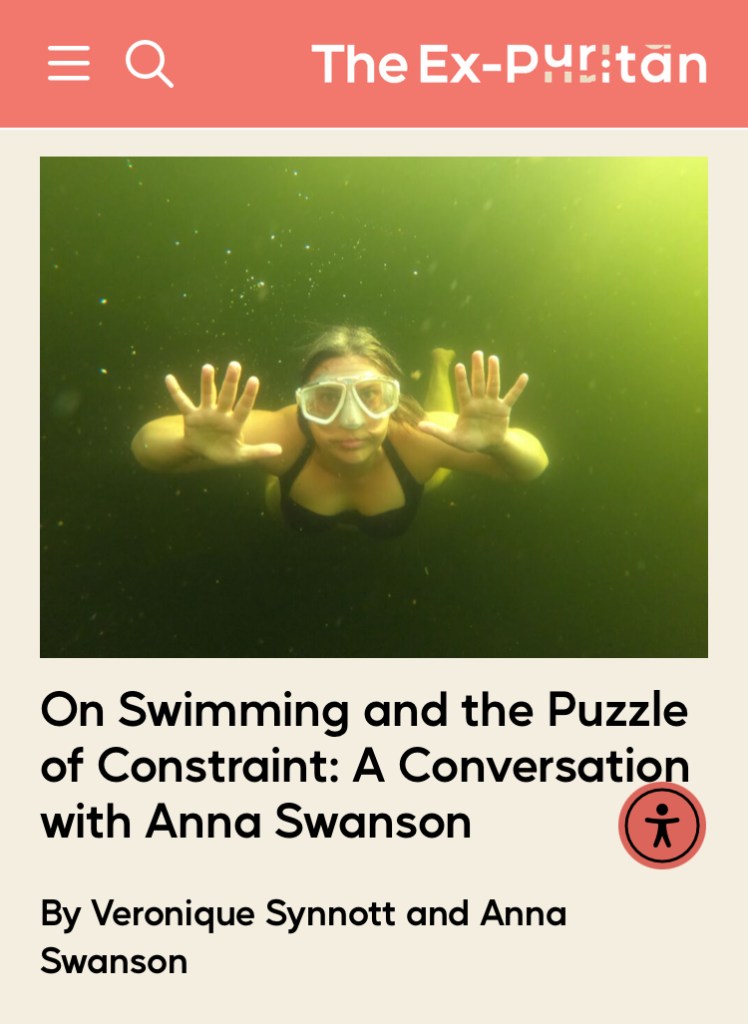
Screen shot of the article from The Ex-Puritan with an orange banner showing the publication name across the top. An author photo of Anna swimming underwater (photo by April White). The title of the interview is below: "On Swimming and the Puzzle of Constraint: A Conversation with Anna Swanson" By Veronique Synnott and Anna Swanson.
In both cases, I’m writing about a realm where neoliberal politics insists on individual responsibility in the face of structural harm. This insistence isn’t accidental or neutral, but a strategic effort to direct collective outrage into the realm of individual action. Whether it’s recycling, clean eating, or zero carbon footprints, this individual focus intentionally obscures root causes and power structures and protects the beneficiaries of those systems from the kinds of collective action and structural changes that might threaten the status quo.
But joy is not always resistance, just as embodiment is not always liberatory. I have watched videos of Jewish Israelis dancing and singing joyfully through the streets waving Israeli flags on what they call “Israeli Independence Day” and Palestinians call “Nakba Day.” While some Israelis in these videos might genuinely be feeling joy in their bodies, this act of public celebration, especially as it weaves through Palestinian neighbourhoods, weaponizes joy and embodiment as acts of colonial violence, erasure, and domination, with the aim of furthering the colonial project of occupation, land theft, and ethnic cleansing.

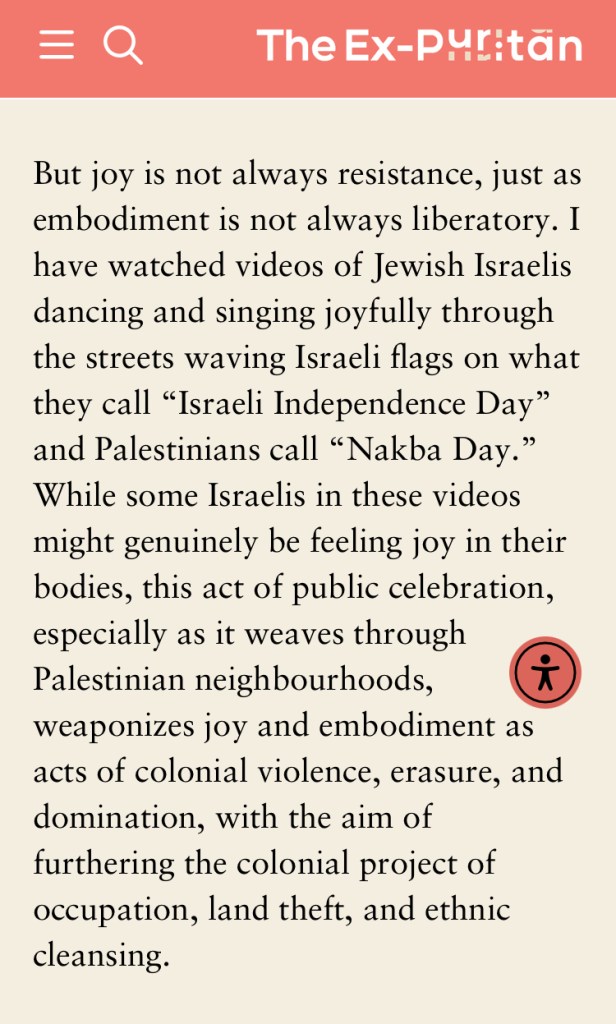
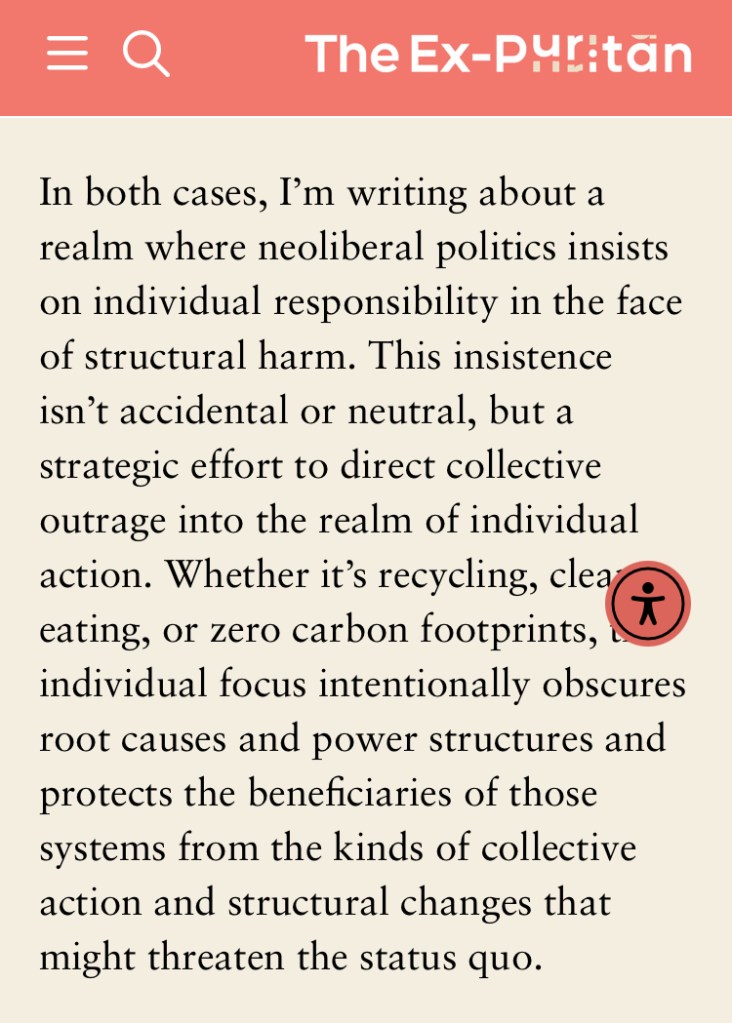
Quotes from the article pictured above:

In both cases, I’m writing about a realm where neoliberal politics insists on individual responsibility in the face of structural harm. This insistence isn’t accidental or neutral, but a strategic effort to direct collective outrage into the realm of individual action. Whether it’s recycling, clean eating, or zero carbon footprints, this individual focus intentionally obscures root causes and power structures and protects the beneficiaries of those systems from the kinds of collective action and structural changes that might threaten the status quo.

But joy is not always resistance, just as embodiment is not always liberatory. I have watched videos of Jewish Israelis dancing and singing joyfully through the streets waving Israeli flags on what they call “Israeli Independence Day” and Palestinians call “Nakba Day.” While some Israelis in these videos might genuinely be feeling joy in their bodies, this act of public celebration, especially as it weaves through Palestinian neighbourhoods, weaponizes joy and embodiment as acts of colonial violence, erasure, and domination, with the aim of furthering the colonial project of occupation, land theft, and ethnic cleansing.